Which of the Following Is Not a Threat to Biodiversity
Scientists have named five main threats to biodiversity. Others include pollution introduced species habitat fragmentation and habitat destruction.

Conservation Preventing Biodiversity Loss Saving Earth Encyclopedia Britannica
Habitat destruction P Flag question O c.
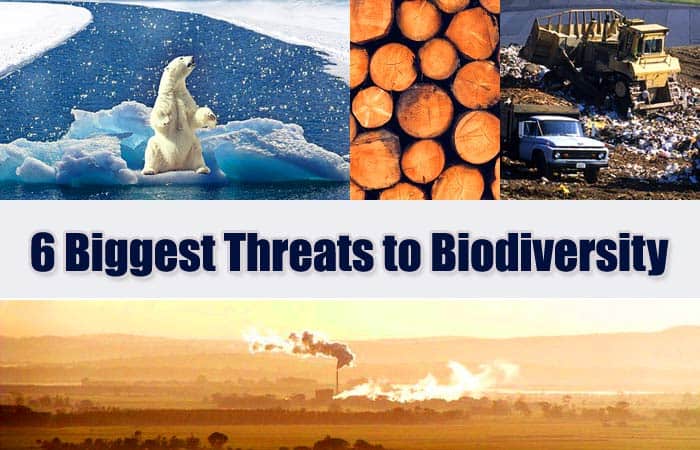
. Science Biology QA Library Which of the following is not a threat to biodiversity. The first two of these are a direct result of human population growth and resource use. See answers 1 star.
Conversion of forest land to agricultural land. A fourth major cause of extinction anthropogenic climate change has not yet. List the seven major threats to biodiversity.
First it is rare that humans intend to make a species go extinct or to threaten biodiversity in some other way. Habitat loss often involves deteriorating habitat quality either due to intentional changes in land use such as the conversion of natural boreal forests to intensively managed forests in northern. A biodiversity hotspot is a region or ecosystem having a high value of biodiversity a high number of endemic species and having a high degree of threat ie.
Overharvesting is one of five primary activities threatening global biodiversity. Deforestation-leads to species extinction in forests. The growth of human populations consumption levels and mobility is the root of most of the serious threats to biodiversity today.
High oxygen concentration O e. Which of the following is NOT a threat to biodiversity. The first two of these are a direct result of human population growth and resource use.
Report an issue. Habitat loss and fragmentation is the main cause responsible for the loss of biodiversity. 7 Main Threats to Biodiversity Habitat destruction habitat fragmentation habitat degradation pollution global climate change and overexploitation.
While learning about the negative impacts of humans on biodiversity please keep a few things in mind. The three greatest proximate threats to biodiversity are habitat loss overharvesting and introduction of exotic species. The first two of these are a direct result of human population growth and resource use.
The third results from increased mobility and trade. The first two of these are a direct result of human population growth and resource use. Amazon Rain forest called Lungs of our planet.
Overuse of water d. Learn how serious these threats are in contributing to the loss of biodiversity in our planet. The human population requires resources to survive and grow and those resources are being removed unsustainably from the environment.
Irresponsible shopping O b. Changes to how we use the land and waters. Human activity and urbanization O d.
Use of land for agriculture and housing b. Carbon monoxide CO Sulfur dioxide SO2 Ozone O3 Nitrogen oxide NO and Nitrogen dioxide NO2 NOx particulate matter PM25 and PM10 and lead. Introduction of new species O b.
The threat to biodiversity that occurs when the homes of different species are destroyed. Which of the following is not a threat to biodiversity 1. 18032011 If we are not aware of this extinction debt Tilman et al.
Disruption of interaction networks Question 86 Fibronectins and. Not yet answered Marked out of 100 Select one. 19 hours agoFollowing are the most important reasons for the loss of biodiversity.
Below we discuss six of the major threats to biodiversity. The three greatest proximate threats to biodiversity are habitat loss overharvesting and the introduction of exotic species. Unless we successfully mitigate the impacts of these direct drivers of change on biodiversity they will contribute to the loss of.
Volatile organic compounds VOCs are not criteria pollution and can be dangerous on their own not as dangerous as criteria pollutants but are dangerous because of their ability to react with other. Invasive alien species climate change nutrient loading and pollution habitat change and overexploitation. The three greatest proximate threats to biodiversity are habitat loss overharvesting and introduction of exotic species.
Five main threats to biodiversity are commonly recognized in the programmes of work of the Convention. Introduced species O e. If exponential growth occurs in the population of a species of predator the population of its prey will most likely a.
Measured in terms of habitat loss and fragmentation. 1994 we are prone to underestimate the level of threat to biodiversity Hanski and Ovaskainen 2002. The human population requires resources to survive and grow and those resources are being removed unsustainably from the environment.
Knowing what they are and how they work can help you identify ways your companys practices might be contributing to declines in biodiversity as well as areas where you can change. The third results from increased mobility and trade. Question 85 Which of the following threats to biodiversity is most likely the main threat on aquatic environments.
Norman Myer gave the concept of the hotspot. Climate change habitat loss and degradation pollution invasive species over-exploitation and epidemics. Helping endangered species D 10.
A fourth major cause of extinction anthropogenic climate change has not yet. The three greatest proximate threats to biodiversity are habitat loss overharvesting and the introduction of exotic species. Which is NOT a potential threat or danger to biodiversity.
Which of the following is NOT a threat to biodiversity. Which of the following is NOT a threat that impacts biodiversity. Aquatic species are especially threatened by overharvesting due to a situation known as the tragedy of the commons.
Habitat destruction habitat fragmentation overharvesting invasive species pollution disturbance patterns climate change What is the most severe threat to biodiversity. Tropical rain forest once covering 14 of the earths land surface is now not more than 4.
Threats To Biodiversity 6 Major Loss Of Biodiversity Biology Explorer
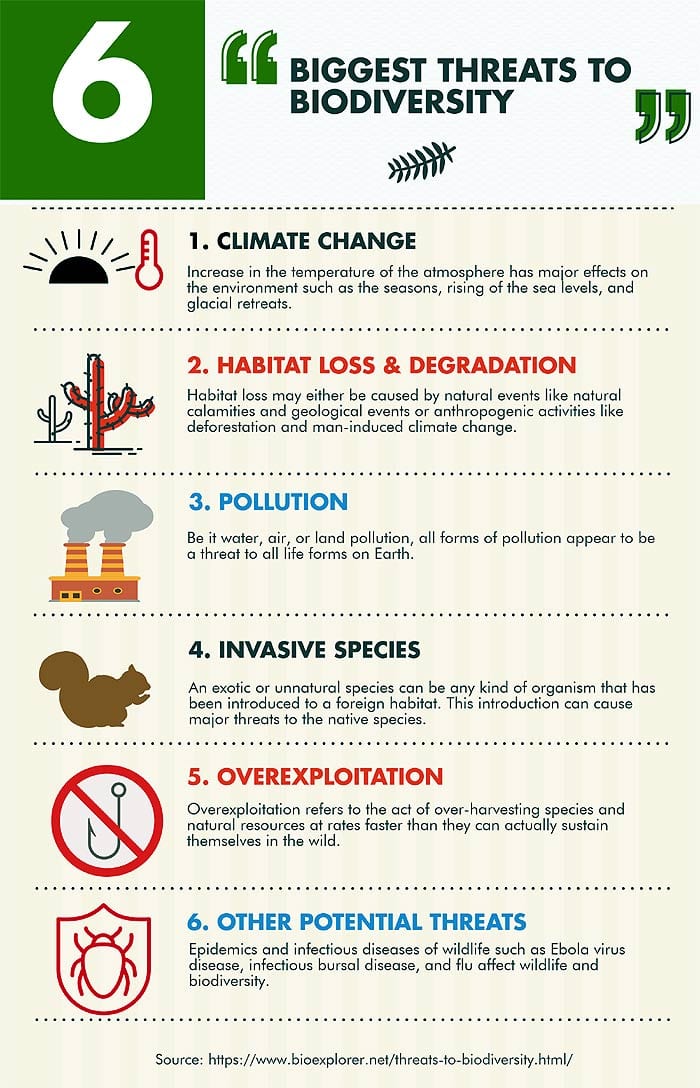
Threats To Biodiversity 6 Major Loss Of Biodiversity Biology Explorer
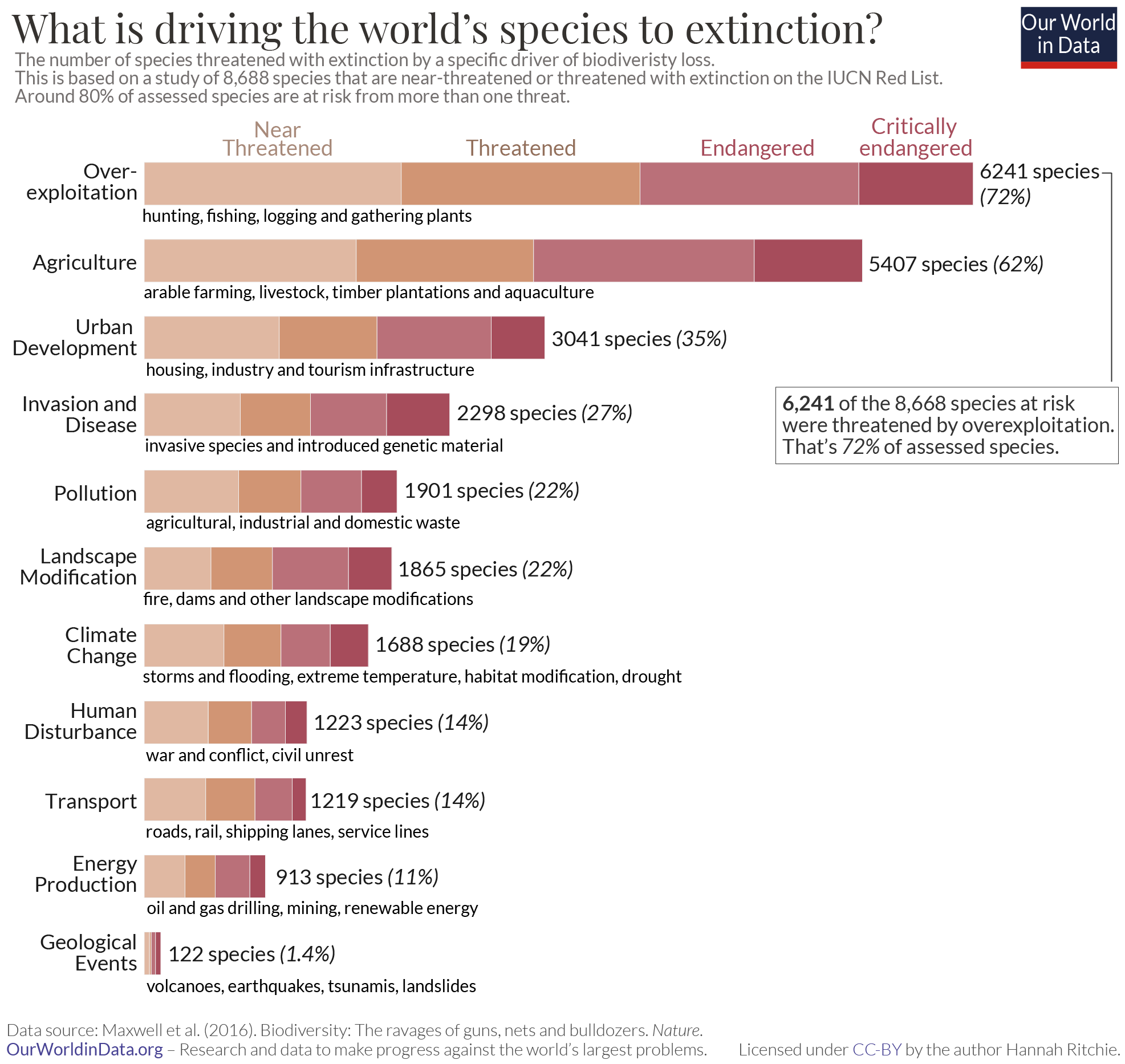
Threats To Wildlife Our World In Data

Threats To Wildlife Our World In Data
Comments
Post a Comment